

My Wayward Brother, part 1
Hell if I know, but this man was leaving the inn covered with blood

Ivan Vassilevsky, September 10–17, 2192
If the metamorph’s shot had pierced my skull, it would’ve made for a hell of a scene: two identical fighters sprawled in their own blood, deep in the catacombs’ gloom. But I was alive and even more determined to complete my crazy quest.
“Hands up! Now!” someone yelled from the darkness.
Johan’s shotgun hit the floor with a heavy thud. I struggled to raise my left hand; my right arm was useless; I feared that the bullet had fractured my shoulder joint. That would’ve taken me out of the fight for eternity.
It was great to be alive, but frustration freaked me out. The metamorph’s secret was probably lost, and all I had were the scraps Jack and I had pieced together. Nevis was gone, Heliopolis was far away, and I had no chance to grab the corpse for study.
This is just the beginning. More will arrive, Helga’s voice whispered inside my skull, sliding down my spine like a cold snake. Did you bother to record everything that happened?
No. It would consume too much energy.
Losing control of my own mind was worse than fighting in the dark. I didn’t want to answer an auditory hallucination, didn’t want to tumble deeper into madness.
Come back when you can, the voice insisted. You’re not insane. It’s not bacteria or chemicals. I’m real. I’m behind the door.
The Sighted rushed in, forming a ring of rifles around me. Seven barrels were locked on my head. Same men I’d fled from earlier—but this time, Johan Rasmussen wasn’t leading. Heldrich was. Armored, visor hiding his upper face, voice as cold as steel.
“Bloody white hell!” he snorted. “Jack, you never said there were two of them!”
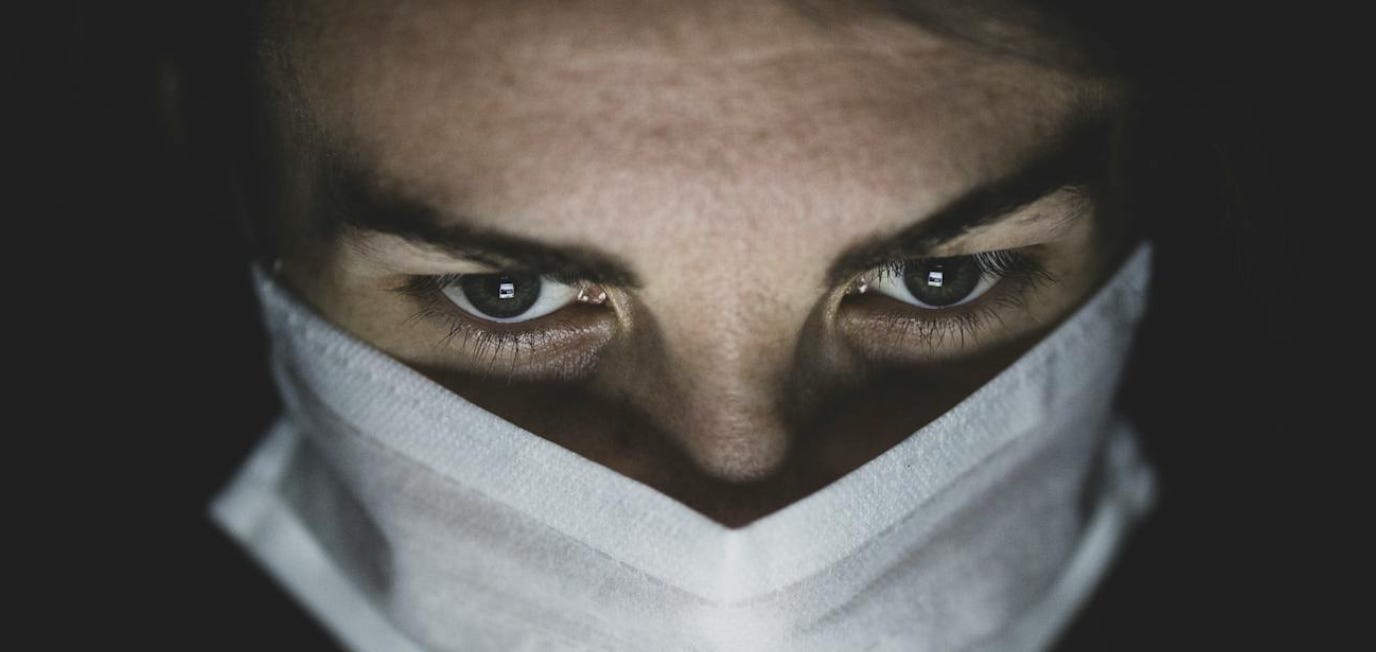
Image: Engin Akyurt
The caravan master pushed through the bulk of the Watchers. His brows were fused into a single harsh line, cracked with deep furrows like stone.
“The dead man—that’s the killer,” he said, though giving me a haggard look.
“Are they twins?”
“Hell if I know, but this man was leaving the inn covered with blood… Mister Vassilevsky mentioned he had a brother in New Bergen.”
I hadn’t told Jack any of that. He’d invented it on the spot, buying me cover. A spark of long-lost faith in humanity flickered in my chest. He even reached down first, helping me up without hesitation—despite Heldrich’s gloomy presence.
Jack’s guilt was written plain on his face. I guessed he’d tipped the Sighted off. But I couldn’t blame him. Anyone else would’ve done the same.
As I stood, pain shot through my leg—blood soaking above my knee where another bullet had grazed through. Still nothing compared to what could’ve happened if not for the bullet-resistant coat shielding me.
“Heldrich! Glad to see you safe!” My tongue felt thick, every word slurred. “I need some booze and rest. Medical aid won’t hurt either.”
“Sure. You’ll get a doctor and a place to lie down… Jack, stop the bleeding, please.”
The caravaner knelt, cinching a belt tight above my wound. Years of trekking through semideserts showed in his sure hands. He stripped off his wool scarf and pressed it against my wrecked shoulder.
I changed my breath and refocused my mind to shut off the pain - a survival skill from Heliopolis handy for accidents or torture, which every kid learns by fourteen. But the relief only lasts fifteen minutes at best.
Heldrich barely glanced at me. Alive was good enough. He crouched beside Nevis, checked his pulse, then flicked on a penlight to see the metamorph’s face in detail.
My heart stuttered at the sight of that flashlight. “DayBreak.” The same model that the guards in Mirny had carried. I used to own one myself as a kid, and it was with me on my quest to Heliopolis.
“Move your asses, guys!” Heldrich ordered. “Take the body and the bastard’s belongings to the liner. Don’t open his medkit—and don’t let so much as a pin go missing.”
Missed the glove already, didn’t you, I thought bitterly. Amazing how sarcasm always finds a way. I wanted to protest—didn’t want anyone laying hands on the Winged Sun’s equipment—but bit my tongue. Anything strange they found on Nevis could be pinned on him. Better to keep quiet until Rakhmanov gives the green light.
Blood loss or lack of air made me nauseous. Part of me just wanted my mind to shut down.
The way back blurred into walls and ceilings, sliding past half-closed eyes. When the mental analgesia wore off, pain waves slammed me—thanks to Jack at least trying not to jostle me more.
Our destination was the Pine Island, a sleeping nuclear giant few had access to, now fused into the Seven Winds like a carcass into a reef.
Two guards stayed with us; the rest melted back into the city. Heldrich stepped into the airlock—once hydraulic, now cranked by hand. The hallway lit up in response. My head cleared at the sight: wooden floors, high arches, stained glass scattering colored light. Who would believe the rough, battered Seven Winds had once looked as classy?
In the center rose a mirrored elevator. My teeth clenched—damn elevators would make me nauseous for eternity.
Heldrich waved me in, politely thanked Jack, then ordered him home.
Jack didn’t budge. “If you want me dead out there, fine. But then you’ll never see your cargo again. Give me men, give me weapons—and we’ll get those bastards.”
“We’ll discuss it,” Heldrich cut him off, pulling a lever by the doors. Then he pried me free, offered his shoulder, and I whispered a useless “thanks.”
The lift clanged, groaned, and lurched upward. I imagined two slaves straining below at a crank, lungs tearing with effort. Three decks later, we stepped out into a landing of glowing glass walls, soft opalescent white. The sight was like Heliopolis, and for a moment, my anxiety eased.
Heldrich unlocked a cabin door with a heavy key, told the guard to fetch Sandy, and motioned me inside. The oval room glowed with brass sconces and blue glass. A wide couch tempted my battered body, and I sank into it, gaze snagging on a black-and-white photo framed in steel: a skeletal woman rising from water, pale eyes staring straight through me. Wet strands clung to her face like seaweed or tentacles.
The head of Seven Winds shut the door and poured me a glass of amber liquor. I downed it without thought. He poured again, and I repeated it. The drink hit like fire—napalm down my lungs, a rush flooding my veins, the pain dulled in a minute.
Replacing the decanter, Heldrich drifted to the photograph.
“Strange, isn’t it?” he said. “The rich had holograms, lasers, the Omniverse, robots, all of it—but they clung to wood, paper, clay, stone. The richer they were, the tighter they clung. Maybe they were thinking of us. If art had gone fully digital, there’d be nothing left of millennia.”
His gaze lingered over the photo. “This woman enchants me. She’s naked because that’s how she feels free—not because she’s offering herself. She’s there. The water’s there. The viewer…” He glanced at me. “…the viewer must know one’s place. And she makes that clear.”
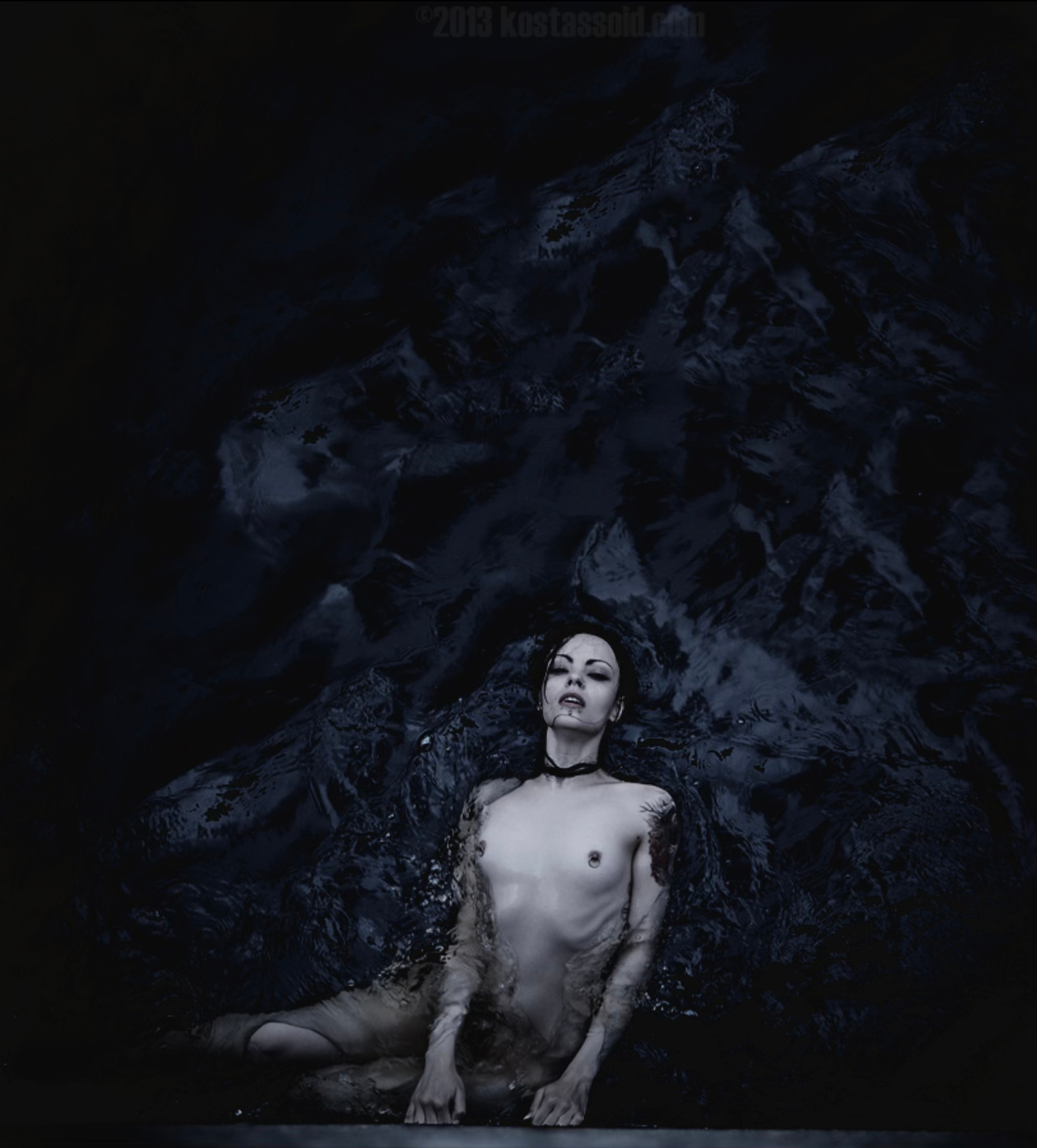
Image: Konstantin Alexandroff, Koshka Black
With those words—odd, coming from someone who’d just spent the night chasing God-knows-who—the cabin’s owner began peeling off his armor. He stacked each piece neatly against the wall, then spread a transparent sheet across a long table of rough planks. After washing his hands, he rolled a towel into a cushion for my head.
“On the table,” he said, pulling on his medical mask. “I’ve no desire to drag myself to the infirmary tonight. I can patch you up just fine here.”
Hissing like a cobra, I left my cozy seat.
“The coat’s made in sections; they need to be unfastened from inside. Makes it easier to take off if the wearer gets hurt.”
“Smart thinking! An outfit designed for special operations. Not the trash we are used to in this town. Your dead copy still has both eyes where they belong. So I’ll have to look under your eye patch.”
It was useless to protest anyway.
With a cautious knock, Sandy entered the room holding a frosty steel container, a mask already on her face, her body fully covered in light blue overalls. She helped Heldrich ease me out of the coat, cut away my shirt, and slipped on rubber gloves—worn thin, clearly reused.
To my great relief, my wound wasn’t as bad as it seemed: the joint and the humerus were intact. Mobility would come back much faster than I expected.
My mental pain-block barely held. I groaned, cursed, but thanked Heldrich silently for the liquor. Luckily, the medics worked fast. Their communication was efficient and almost wordless.Soon, my wound was dressed, my arm bound tight to my body. Satisfied with his work, Heldrich dragged up a leather chair.
“So,” he said, settling in, “what are you going to tell me about tonight? You’re not about to claim that bastard stumbled in by accident. And I know you visited Zachariah Glass’s shop. I know exactly what you bought.”
He held up my Martian glove. I had underestimated just how quickly he could reach anyone, anything. A wave of shame choked up my fragile peace.
“Don’t tell me you’re collecting antiques. You knew exactly what this was. Probably knew where to look. And you didn’t cozy up to Jack for nothing. The lab—that’s a cover. You’ve got another agenda. And if that agenda crosses mine, you’d better start drafting a will. I’ll even bring you the paper.”
I was ready for this conversation.
“My fiancée is a fan of everything to do with space flights. And then, just like that, the glass caught my eye at the old man’s shop. Must’ve been a fugitive from Mirny paying Glass a visit. And if I wanted him and his assistant dead, I wouldn’t have sent in a double. I’d have hired local muscle.”
“Oh, please. No one here would touch that. Times have changed, Ivan. These days are nothing like the old ones.”
Such a genius — and twice as arrogant, hinting that everyone feared him too much.
“And I sure as hell wouldn’t have torched the workshop and risked burning down half the town,” I replied.
“Sounds logical. No one in their right mind works that sloppily unless they mean to set someone else up. But why are you in Seven Winds in the first place? Your legend doesn’t work here anymore. I want truth.”
I was ready to reveal a piece of it.
“First, I’m a senior liaison for Winged Sun — a Pathfinder. My orders were to establish relations with you and launch the joint project we’ve already gone over. That project is exactly what someone tried to sabotage tonight. I’ll tell you about these people too—but only what I know. Which, unfortunately, isn’t quite a lot.”
Heldrich rose to pour himself a glass.
Image source: Cottonbro Studio
“So, Heliopolis’ nerds haven’t gone extinct?”
“Alive and kicking,” I said. No need to mention our troubles.
“Alright… then why spin that New Bergen story? You look about as much like a trader as I do a miner. And where there are secrets, there’s trouble. Whether you meant it or not, you dragged it here.”
“Tell me straight, Heldrich…” Saying it felt like fighting three men barehanded. “The reactor on Pine Island. Is it still running?”
He rubbed the bridge of his nose, jaw tight. Worn down, furious, barely keeping the lid on. Hard to blame him: some stranger shows up under false pretenses, stirs up murder and arson, then has the defiance to start asking about the most precious resource in the city.
“That’s for experts to judge,” he said coldly. “And I’m an expert in a different system. That’s why we tap hydroelectric from the Thane instead.”
“I’m guessing someone wanted to test the old beast.”
“Wasn’t that you and your scientist friends?” His sarcasm could’ve kept a family fed for a week. “Living high on the hog in your pretty house, while the rest face every winter like a war—wondering if they’ll survive.”
That’s when it hit me. Heldrich was so wound up, that he’d slipped into Russian with a slightest accent.
If I’d been sober and uninjured, I might’ve cracked his skull with the nearest heavy object. But even in my battered state, the picture clicked together, and his story was ninety percent clear now.
I just had to keep my mouth shut about Mirny.
“Yeah, Heldrich, that’s right,” I said, carrying on in English as if nothing had happened. “But we’ve decided it’s time to put an end to all that. The surviving achievements of science need to be revived and expanded, not locked away. It’s time to make friends before the enemies get too close. Our offer about the lab is real; it’s not some smokescreen to cover shady business behind your back. And the whole New Bergen cover story—I would’ve told you about it anyway—was just to keep our cooperation hidden from hostile forces.”
“You mean the Moon Cross?”
“Let’s start with the Moon Cross, since we know them best. Do you still see them as a bunch of savages with axes?”
“Well, not exactly. As far as I know, half of those fanatics—maybe more—are descendants of the U.S. Army. Their guns still work just fine. Americans, huh? Only they could let the religious plague into their ranks.”
What’s the matter, Heldrich—never studied Ancient Rome? Or did you throw it all away, chasing death in that lab of yours?
“They’ve got self-propelled neutron guns, swarms of autonomous drones, and other kinds of high-precision ‘old tech’. So far, we’ve been lucky — Antarctica hasn’t been on their radar for decades. But that changed not long ago.
Heldrich’s face went rigid. I expected sarcasm—something like ‘When did you find time to travel that far?’—and sure enough, he gave me almost that.
“You’ve got quite the intelligence network,” he said. Not mocking this time. Frightened.
What’s spooking you, Reinhard Lutz? That what I know matches what you know?
He gathered himself and shifted tracks.
“And this prodigal brother—the one so fascinated with other people’s brains. Yours or theirs?”
“There’s a chance he’s with them. But more likely, he belongs to another crew. One that operated here under the cover of a corporation.”
“Nautilus, you mean? But Glass is the only one who survived the Blackout and the clan war. All they had left was a service center and a clinic.”
Good grief. Does he really not know about the facility? Or is he pretending?
“They used to have a global network and may be coming from afar.”
Heldrich checked his mechanical watch—though he had to know it was already far too late. He handed me a foul-tasting potion to help me sleep, dropped a curt goodbye, and left, killing the lights. I lay still, breathing, letting the pieces settle into place.
Back in Mirny, I’d barely seen Reinhard Lutz. He was a lab rat, while the other two doctors handled the townsfolk. All I knew was that he clung to Dr. Osokin like a shadow, almost a younger brother. People called him “the recluse,” “the pale moth,” “the eternal virgin.” Most often, they didn’t mention him at all.
And me? I was too busy with slingshots, puppies, and exploring the rusting wrecks scattered across the old spaceport. So when did he start to change? When did those slouched shoulders straighten? When did that soft, flabby body harden into muscle, his face cut into sharp, commanding lines? I can’t even remember Lutz’s voice—who remembers the voice of a moth? But Heldrich—almost everything he said carried the weight of an order. That’s what desperation to become someone else does when redoubled with survival mode.
He came to Seven Winds right when the epidemic hit Mirny, which is troubling enough. And if he even suspects I know what really happened, what’s to stop him from tossing me to the fish once rage, shame, and fear outweigh his equanimity?
Before I jump to conclusions, the Pathfinders need to explore Mirny thoroughly. This time as a group, not another lone scout. Antero’s fate proved what happens to one man alone—he gets cut down by the Prophet, our worst nightmare.
Sun forbid old Lindon ever joins forces with Nautilus. Old feuds would mean nothing then. And who should prevent this union from happening?
Right. Rakhmanov, me and our comrades. Exhaustion pressed in harder, but the picture was taking shape. It was better to keep my head down, breathe, and wait for morning.
I woke close to noon, sunlight pouring through the round porthole. But it wasn’t the light that dragged me back—it was hunger.
My right arm was strapped to my side, and the rest of me barely obeyed. My stomach… if I didn’t know anatomy, I’d swear it was trying to claw its way out. At first it only begged for food—anything—but by the time I staggered upright, it was twisting for a different reason entirely.
I half emptied the carafe of water Heldrich had left me and scanned the room. No idea how airtight the door was, but with the power cut low, the filters were unlikely to be working. The smell crept in first like a whisper, then hit me in a wave so heavy it curled my gut. Rotten meat, weeks gone. Like a corpse wrapped in plastic, left to bake three days in the sun, then peeled open.
What the hell was it? A whale washed up nearby? A nest of rats rotting in the hold?
Stench came with wilder cities—you expected it. But this bad? And on the Pine Island?
A surge of nausea doubled me over; with an empty stomach, the dry heaves were hell.
What if Heldrich is experimenting on me with some kind of toxic gas? But then why bother extracting the bullet, patching me up, pouring the precious whiskey down my throat?
My eyes fell on the scraps of my shirt draped over a chair. I tore off the largest piece, soaked it with water, and pressed it over my mouth and nose. It dulled the stench just enough to think.
The porthole wouldn’t budge—jammed, or locked on purpose. The door rattled but stayed tight. The ventilation grates were hopeless, not with my arm strapped.
Damn you, Lutz. I’ll hang myself before I keep breathing this rot.
I slumped against the door, rag over my face. That’s when it swung open. A tall, lanky figure filled the frame, sealed in a matte-silver protection suit.
“What the hell’s going on in here?” I rasped, forcing myself upright. My head spun, stomach lurching.
“Your precious twin’s decomposing,” Heldrich’s voice came through the respirator, even and clinical. “See it for yourself, if you dare.”
Previous chapter|Table of contents|Next chapter